Refurbishing a Smith Corona Sterling Typewriter

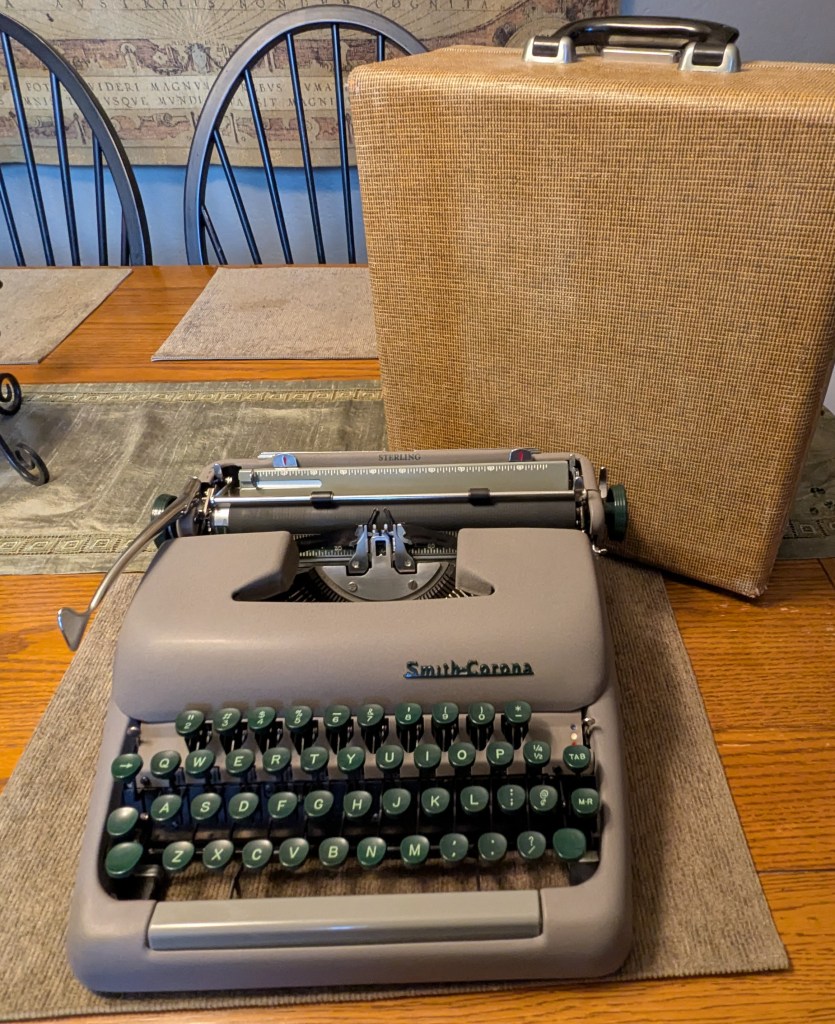
Smith Corona Sterling Typewriter, Series 5

If you’re in the United States and looking for a first typewriter, I’d recommend one of the Smith Corona series 5 machines. These guys aren’t as sleek as the speedline or flattops that came earlier, nor as colorful as the Smith Coronas that followed the series 5. But they’re solid, not that difficult to service, and widely available. Smith Corona must have made millions of them.

I picked up this Sterling, made in 1954, a couple years ago for the grand sum of $54. It’s just about the cheapest in my collection, but I find myself pulling it out of its case regularly. It makes a great grinding noise with the carriage return and has a sort of clunk-clunk-clunk feel as I’m typing, but with a nice silk ribbon (thank you Ribbons Unlimited) it produces great dark type. The margin release is solid, it never skips a space in the middle of a word at the end of a line. I also like this gray, almost purple color, though most of these machines come in different shades of brown.

I spent some time servicing this machine before using it.
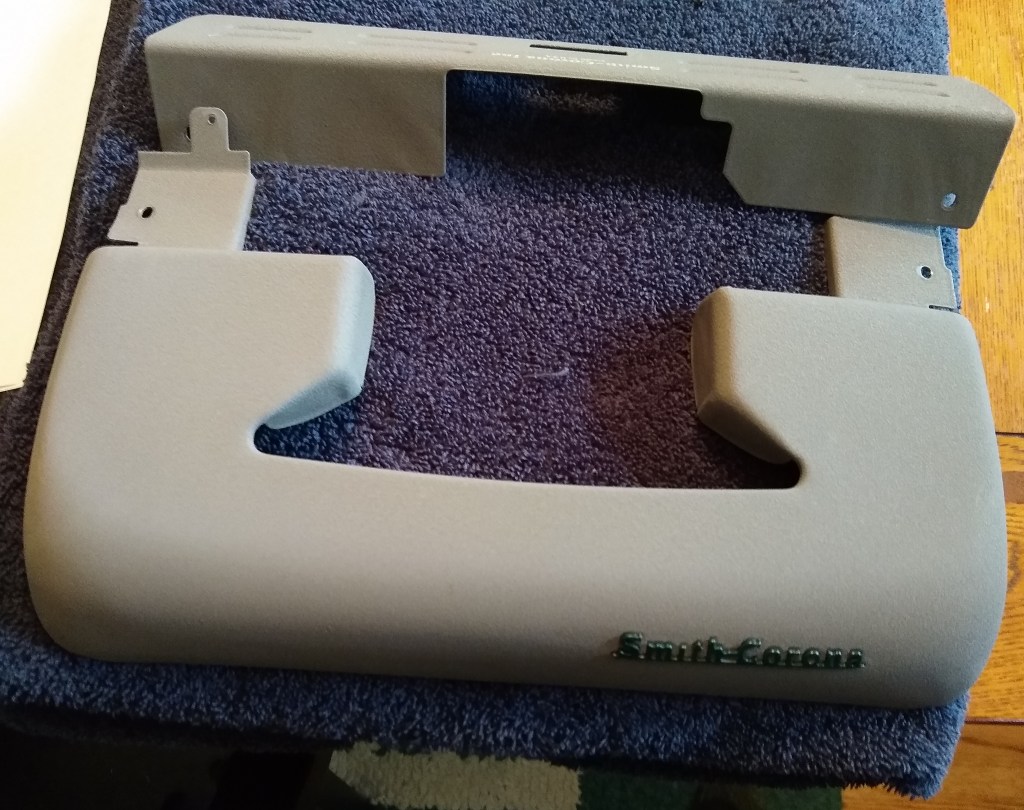
First I removed all the body panels and pulled out the platen and anything else that I could easily remove. I took a picture of just about every screw so I would remember where it went when it came time to put the machine back together. (I have a small plastic case–like a fishing tackle box, but smaller–with little slots where I can keep the screws all separate, and don’t have to worry about losing any of them.)
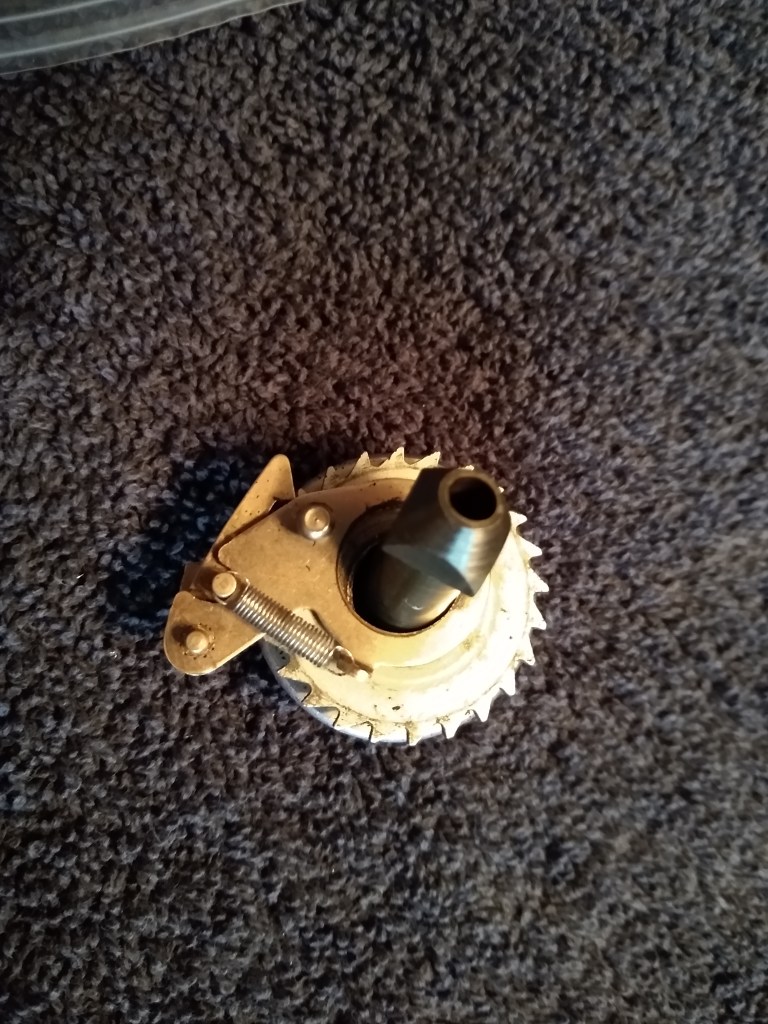
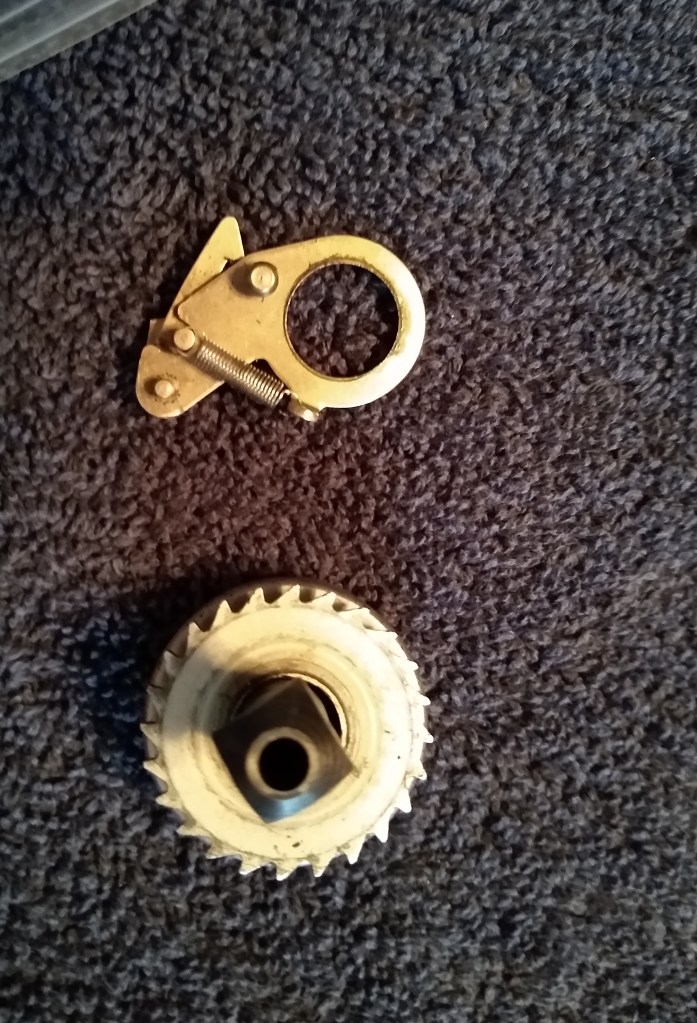
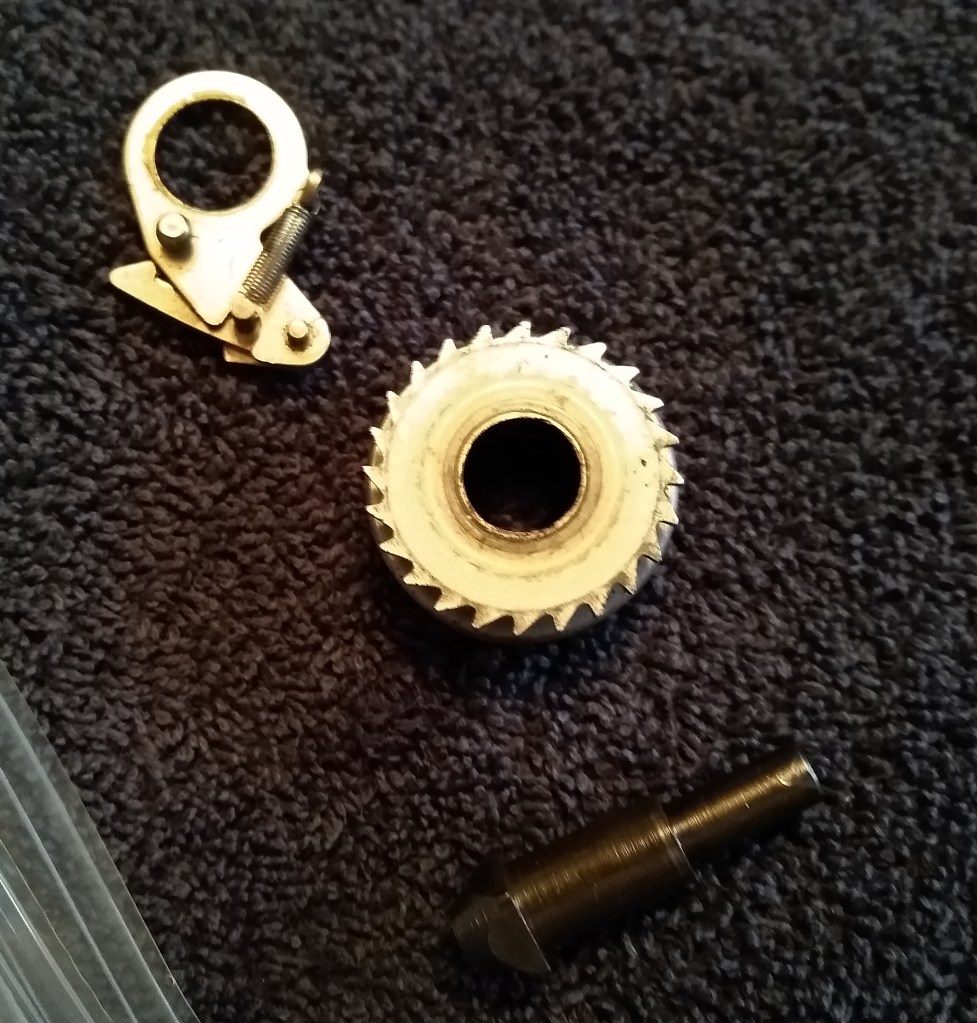
I took a series of pictures of the more complicated pieces like this ratchet that advances the platen as I disassembled it. Again, this helps when it comes time to put it all back together.
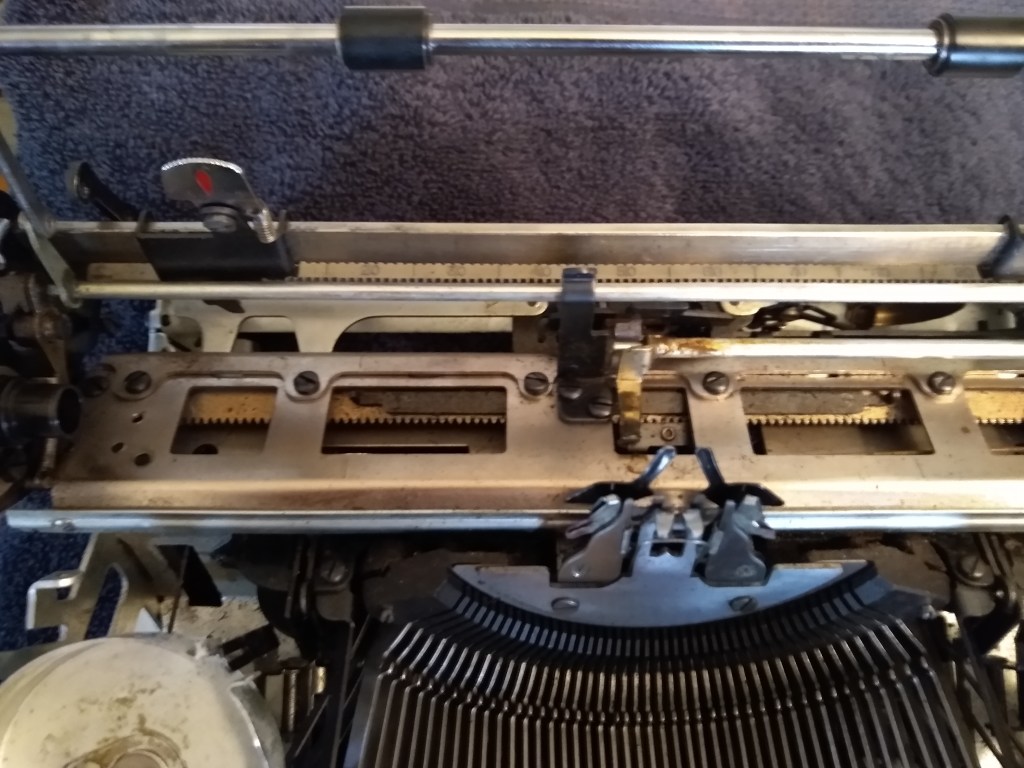
Then I gave the stripped machine a thorough cleaning with mineral spirits, and I scrubbed all the body panels with Simple Green. Here’s before and after cleaning the innards.
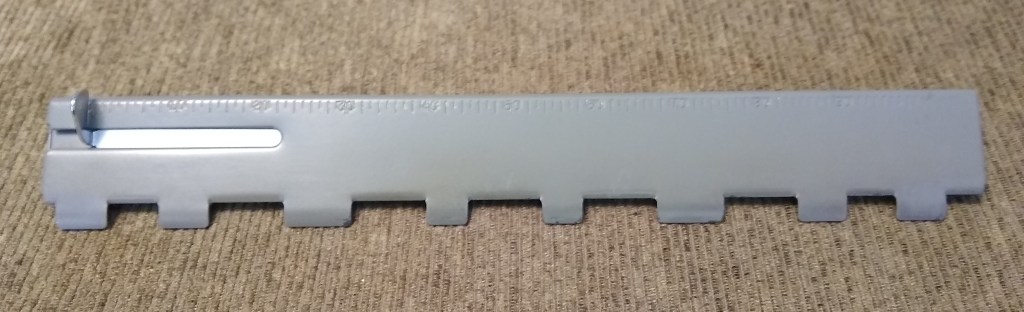
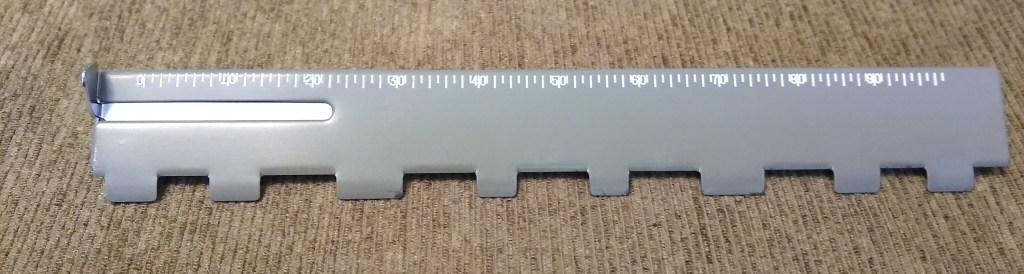
And I touched up some of the paint. The paper guide was very easy to make look almost new with a white paint stick.

Plus, I changed out the felt both in the back of the machine and under the top lid. The old felt was in pretty bad shape, and didn’t smell so great once it got wet.

Here’s the machine looking pretty spiffy. (Though I also later matched the paint to touch up the lower left corner that had a small rust spot.)
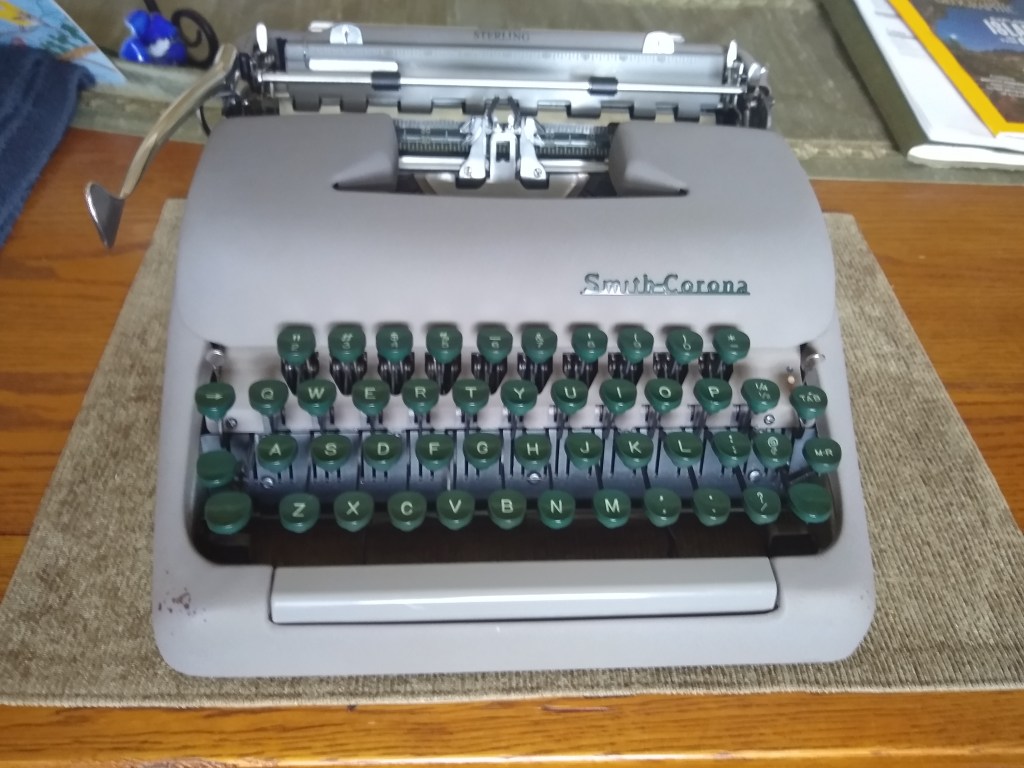
Clean and spiffy Smith Corona Sterling

One of the nice things about these Sterlings is that they aren’t all that complicated. The Olympia machines in my growing collection have a whole lot more going on with their innards.

I also really like the case. It reminds me of the luggage that I might have seen in my grandparents’ house.
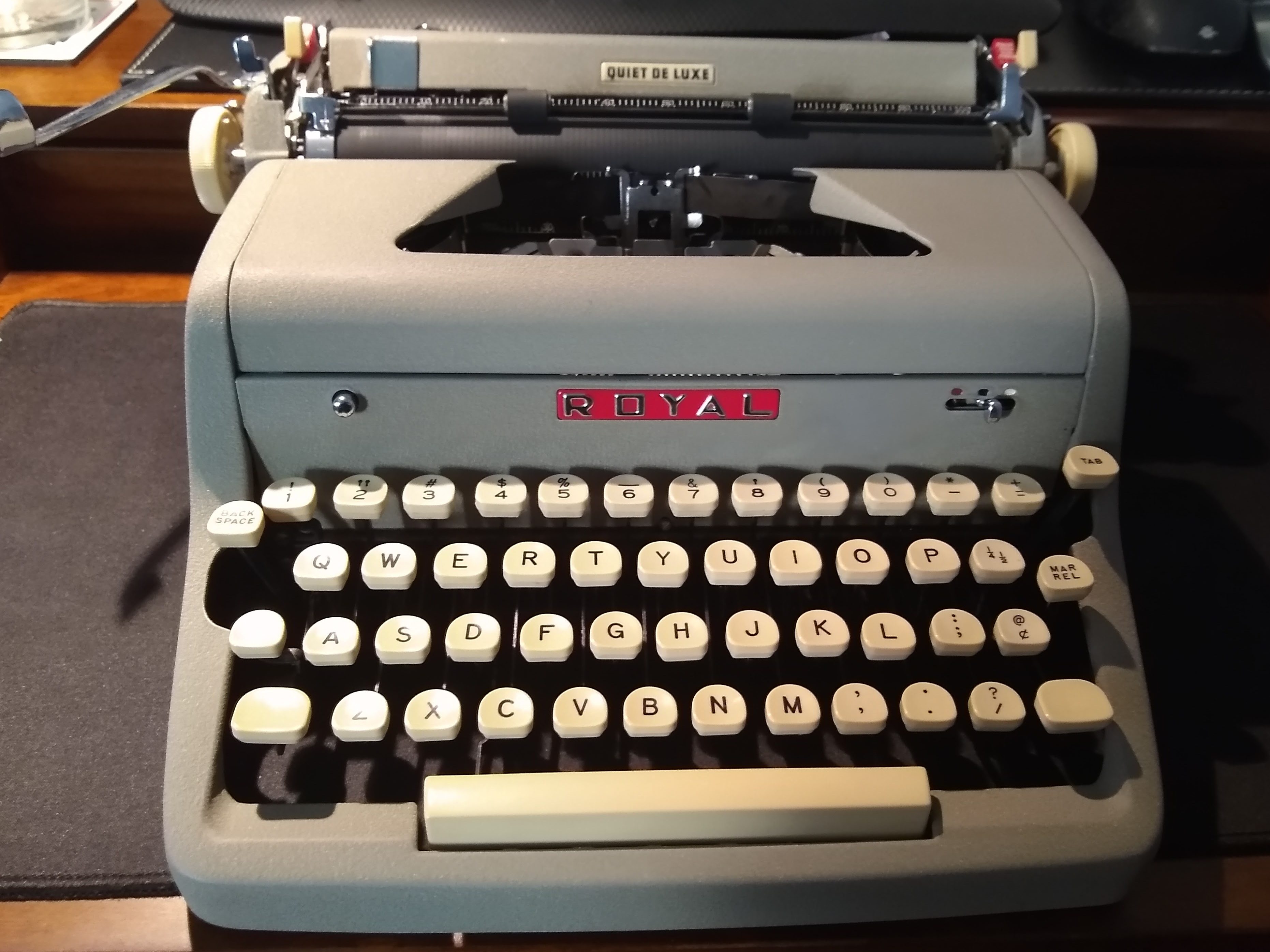
Royal Quiet De Luxe Typewriter

I’m terrible at writing rough drafts. The delete key always beckons and I find myself editing endlessly and never reach the end. I soon realize I’m writing a different story than the one that I started. Enter the typewriter. I started working on an old, electric that I had in the basement and made great progress–until it died. That set me on the search for the perfect, old-school writing machine.

This Royal Quiet De Luxe is the most recent addition to my growing horde… um, collection. According to typewriter database, this guy is from 1957. It’s part of the line of machines that Royal released in different colors. The green and blue (never mind pink) machines sell for steep prices. But I got this one for not a whole lot. And I do like the colors, maybe not my first pick, but still a solid design.

Royal Quiet De Luxe, Brown with Yellow Keys, 1957

I had read that these are great typers. At first this one took a bit of getting used to compared to the firmer touch of my Olympia SM4 (which punches holes in the page and is loud… machine-gun loud). I also like that this one has an elite typeface. I get about 400 words on a page. My rough drafts are long, so I don’t churn through quite so much paper.

This one arrived super clean. I wonder if it’s seen more use in the last few months than during the rest of its days. There were lots of eraser shavings that I had to clean out, plus a lot of white out, seems this guy belonged to a frustrated typist at some point in its history. The white out on the keys chipped off easily enough, but I spent hours getting it off the front panel. I ended up using a pin and Simple Green plus a magnifying glass… see the perfectionist emerging again?

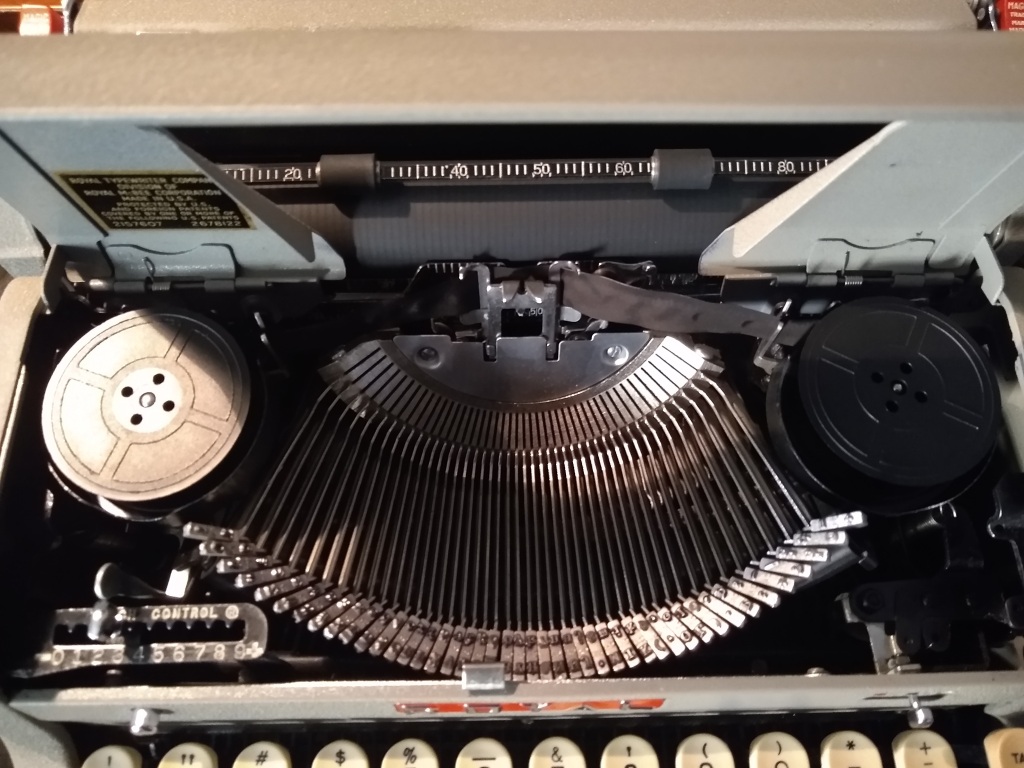
Royal Quiet De Luxe, Front Cover Open

The magic margins did give me a little trouble. They feel over engineered. I don’t move the margins once I’ve set them. (Nor the tabs so having those all on the back works out fine.) I did get the margins to work by cleaning the back of the machine thoroughly and then adding a drop or two of gun oil to the margins. They zip around now, and the carriage returns to the same spot on the left margin cleanly. (I was having a problem where the left margin would jump a space or two on its own.)

Royal Quiet Deluxe, Margins and Tabs

The carriage locks with a little lever on the side, and the machine can be secured in its case with two side levers and a slot in the back. I don’t have the space to leave it out permanently. The case sits on the floor near my desk, but looks great for something that’s weathered more than 60 years.

Royal Quiet De Luxe, Case

All around, a solid machine that isn’t difficult to maintain.